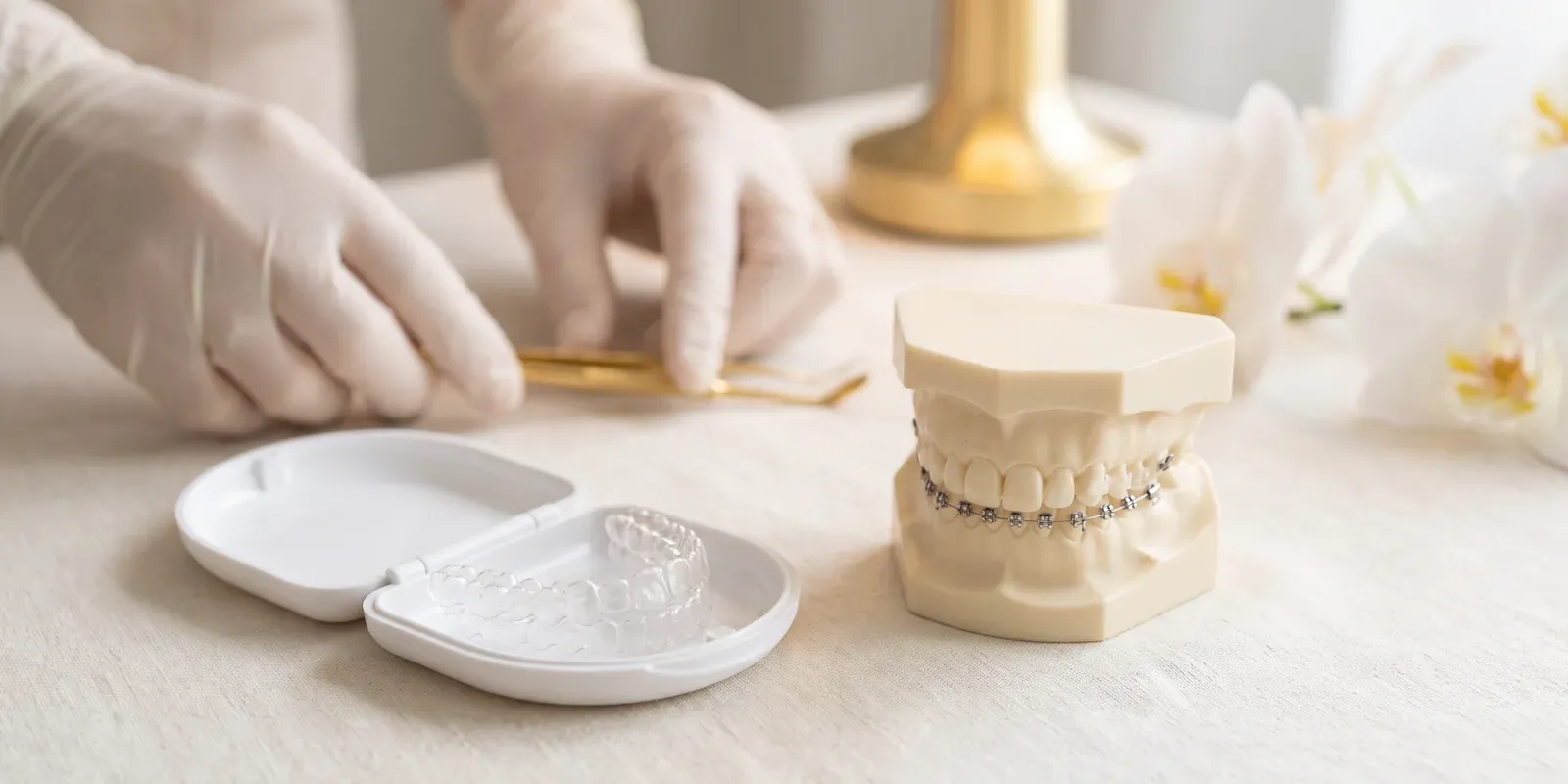
Do you or your children have gapped, crowded, or crooked teeth? Metal braces or Invisalign treatment can help you work toward the smile you want. However, one question remains: which treatment option is best for you?
Dr. Kerri Hill at The Art of Dental Wellness answers that question by comparing Invisalign and traditional braces side by side.
How Do Metal Braces and Invisalign Work?
Metal Braces
Metal braces are used to correct crowding, alignment issues, protrusions, crookedness, and irregular spacing of teeth. Braces adjust the placement of teeth over a predetermined time.
Braces are composed of brackets with archwires placed across the teeth. The brackets are made from ceramic, metal, or a hybrid combination of materials. Patients also have a wide range of colors to select from, including gold-plated ones.
According to the treatment plan, metal braces exert constant pressure on your teeth. Treatment time depends on the case.
Invisalign
Invisalign is a popular brand of clear teeth aligner trays that treats conditions such as overly crowded teeth, overbite, widely spaced teeth, crossbite, simple bite irregularities, and mild relapse that sometimes occurs after traditional braces.
These plastic appliances are also referred to as clear braces or clear aligners. They are computer manufactured. Since they are transparent, they can align your teeth without compromising your smile aesthetics.
Invisalign is tailored to the patient’s specific needs and slides over the surface of the teeth. You can remove the aligners during mealtimes, brushing, and flossing. However, dentists recommend that they stay in for a minimum of 20 hours a day.
At the initial stage of consultation, photos of your teeth are taken and sent to a dental lab, where they are used to fabricate aligners that are suitable for your teeth. Throughout treatment, new aligners are built to keep moving the teeth toward the desired position.
Your dentist will schedule check-up visits every four to six weeks. During these visits, you will receive one or two sets of aligners for your bottom and top teeth. In most cases, about 20 to 30 aligners are used before the end of treatment.
What Are the Benefits of Invisalign over Metal Braces?
Metal braces can align teeth, but they can be less attractive, less comfortable, and sometimes even painful to wear. Many adults also feel self-conscious wearing them. Invisalign offers an alternative.
Here is how the two compare.
| Metal Braces | Invisalign | |
|---|---|---|
| Appearance | Brackets and wires are easy to notice | Clear aligners are barely noticeable |
| Comfort | Stay on until a professional removes them | You can remove them whenever necessary |
| Safety | Wire and protruding bits of metal can injure gums and the inside of the mouth | Smooth aligners with no wires |
| Cleaning | Food particles can get caught between the braces | Removable for brushing and flossing |
Appearance
A mouth with metal braces can look as though it is filled with large, easily noticeable metal. It is also easy for food particles to get caught between the braces without the wearer noticing. Invisalign, on the other hand, is barely noticeable.
Comfort
Invisalign wearers can remove their aligners at any time, when necessary. Metal braces have to stay in place until a professional removes them.
Safety
Traditional braces contain wire as well as other protruding bits of metal that can injure gums and the inside of your mouth. Clear aligners are smooth and comfortable.
A lot of force is also used to align the teeth with metal braces. This can encourage demineralization and tooth decay, so careful cleaning matters with any orthodontic treatment.
Duration of Treatment
Treatment time varies from person to person with either option. Your dentist can explain what to expect for your case. Individual results vary.
Which Option Is Right for You?
Invisalign has several advantages over traditional metal braces. Aligners are more comfortable to wear, are removable for cleaning, and are less noticeable. Cost is quoted at your consultation, and our team can walk you through your options. Individual results vary.
If you’re ready to talk about straightening your teeth, get in touch with Dr. Kerri Hill at The Art of Dental Wellness to set up a consultation. We look forward to seeing your smile.
The questions patients ask us first
How do Invisalign and metal braces differ?
Metal braces use brackets with archwires that stay on until a professional removes them. Invisalign uses clear, removable plastic aligners that are computer manufactured for your teeth.
How many hours a day should I wear Invisalign?
Dentists recommend that aligners stay in for a minimum of 20 hours a day. You can remove them during meals, brushing, and flossing.
Is Invisalign more comfortable than metal braces?
Traditional braces contain wire and other protruding bits of metal that can injure gums and the inside of your mouth. Clear aligners are smooth, and you can remove them when necessary.
How often are check-up visits during Invisalign?
Your dentist will schedule check-up visits every four to six weeks, at which you receive one or two sets of aligners for your top and bottom teeth.
This article is general information, not personal medical advice. Every smile and treatment plan is different, so Dr. Hill reviews your options with you at your consultation.