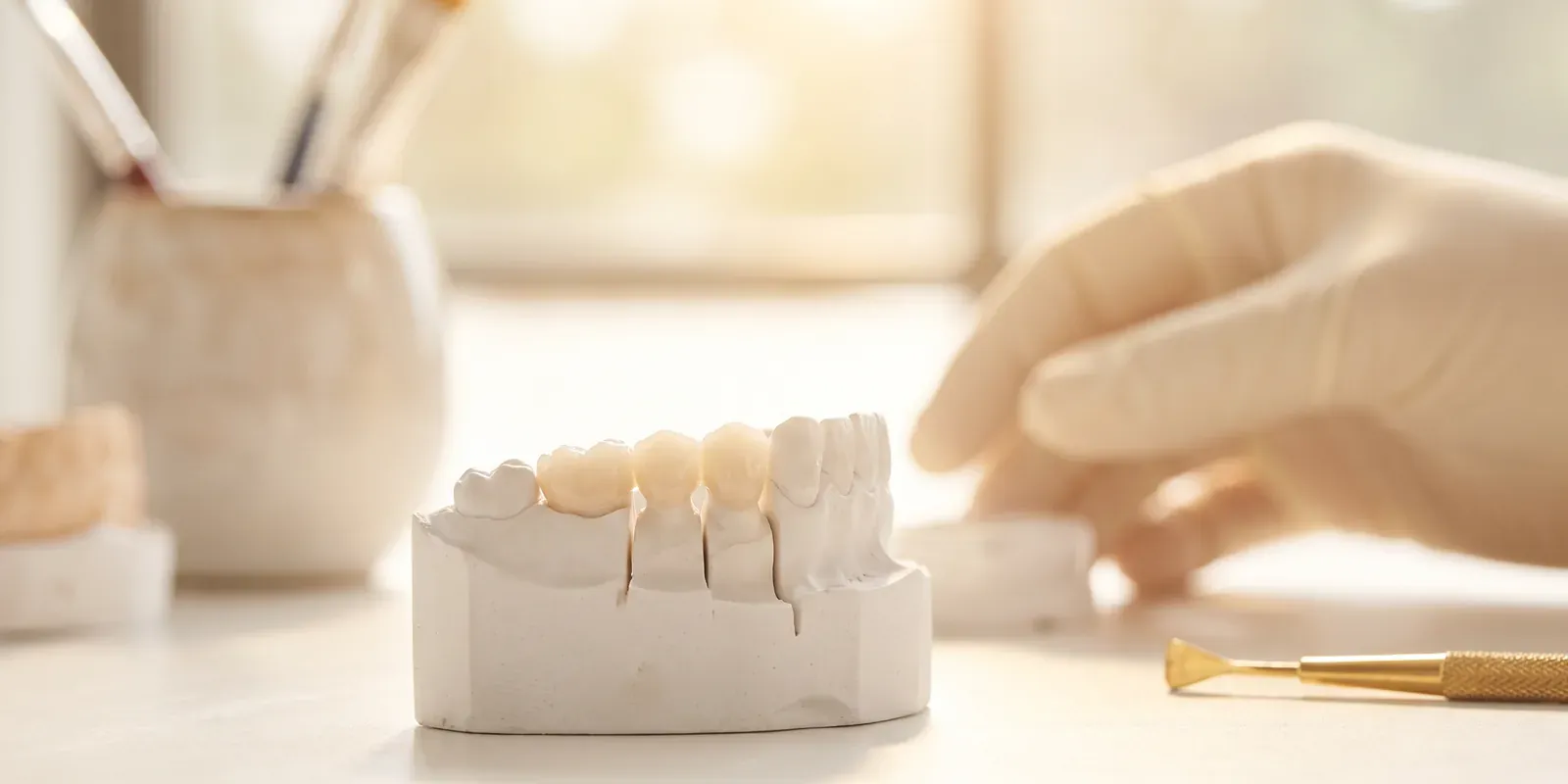
Missing front teeth make it difficult to talk, eat, and smile clearly and confidently. Dental bridges are one solution to restore a smile you can feel good about. Individual results vary.
It helps to enhance dental and overall health. As the name implies, bridges help to bridge the space between the teeth where the teeth are missing.
The procedure usually requires two appointments. Read below to find out how the dentist installs the bridge.
Types of Dental Bridges and Their Procedures
The following are the different types of bridges, along with their procedure:
Traditional Fixed Bridge
Traditional bridges are the most common. The dentist uses the procedure when the patient has original teeth on both sides of the space caused by the missing tooth.
These fixed bridges can be manufactured using ceramics, metal, or porcelain fused to metal. They have a filler tooth and two or more dental crowns, which are all linked.
Traditional Bridge Procedure
- Firstly, the dental professional prepares the abutment teeth.
- Then, they numb the affected region and eliminate some enamel portions.
- Now, the dentist adds the crown over the abutment teeth.
- After that, they use a putty-like material and take the dental impression of the patient’s mouth.
- Next, the dentist sends all essential information to the dental lab. The lab technician will then create the bridge and the crowns.
- Meanwhile, the dentist offers a temporary dental cap and the bridge. After two weeks, the patient visits the dental clinic for the final dental bridge.
- Now, the dental professional eliminates the temporary restoration and puts in the final bridge.
- Finally, they will cement the dental bridge and determine the bite. It is necessary because it helps the dentist check if everything works as intended.
Cantilever Dental Bridge
The cantilever bridge is linked to one abutment tooth only. The dentist recommends it for individuals with teeth on one side of the gap. The whole procedure takes multiple dental visits.
Cantilever Bridge Procedure
- Firstly, the dental professional at our practice takes impressions of the patient’s mouth.
- Next, they will prepare the abutment tooth to fit the crown.
- The dentist puts in a temporary bridge or crown.
- After that, the expert sends the impression to the dental laboratory for the bridge and crown manufacturing.
- Once they are ready, the dentist adjusts the bridge and crown and cements them in their place.
- Then the dental professional gives you some instructions to follow.
Maryland Dental Bridge
A Maryland bridge is a long-lasting bridge that replaces missing front teeth. Individual results vary. It got its name from the University of Maryland.
This bridge is manufactured using a ceramic or porcelain-fused-to-metal framework.
The procedure to place a Maryland dental bridge is fast, non-invasive, and simpler. It also does not need multiple trips to the dental office.
Maryland Bridge Procedure
- Firstly, the dental professional will etch the back of the adjacent teeth.
- Now, they add a bonding resin to the back of every adjacent tooth.
- Next, the dental expert will put the metal wings of the bridge to the resin on the back side of every tooth.
- Then, the dentist will cure the resin to ensure the bridge stays in its position.
Implant-Supported Bridge
The dentist uses implant-supported dental bridges to replace multiple teeth. Implants support these bridge types rather than frameworks or dental crowns.
Typically, the dental professional puts one dental implant for each missing tooth. This series of implants hold the dental bridge in its position.
Implant-Supported Bridge Procedure
- The dental professional takes an oral examination by taking X-rays of your gums and teeth. These scans help the expert identify the condition of your teeth.
- They will also ask about your dental and medical history.
- Then, the oral surgeon or periodontist adds the dental implant into the jaw.
- The dentist now gives some time for the implants and gums to heal.
- After 3 to 6 months, the dental expert uses X-ray technology to evaluate bone growth.
- If everything goes according to plan, a second surgery exposes the dental implant.
Who Needs Dental Bridges?
If you have single or multiple missing teeth, a dentist can tell you whether a dental bridge is right for you.
Bridges fill the spaces caused by a missing tooth. The most common causes include gum diseases, tooth injury, and decay.
The questions patients ask us first
How many appointments does a dental bridge take?
The procedure usually requires two appointments. A cantilever bridge takes multiple visits.
What are the types of dental bridges?
The four types are traditional fixed, cantilever, Maryland, and implant-supported bridges.
Who needs a dental bridge?
Anyone with one or more missing teeth may need one. The most common causes of missing teeth include gum disease, tooth injury, and decay.
How is an implant-supported bridge held in place?
Typically one dental implant is placed for each missing tooth, and this series of implants holds the bridge in position.
This article is general information, not personal medical advice. Every smile and treatment plan is different, so Dr. Hill reviews your options with you at your consultation.